
News list
Recommended news
 Building a dust-free workshop for medica
2024-02-01
 Design of Food Cleanroom
2024-02-01
Design of Food Cleanroom |
Publisher:Suzhou Lingxi Purification Engineering Co., Ltd. │ Click count:726 │ Publication time:2024-02-01 15:17:48 │ close |
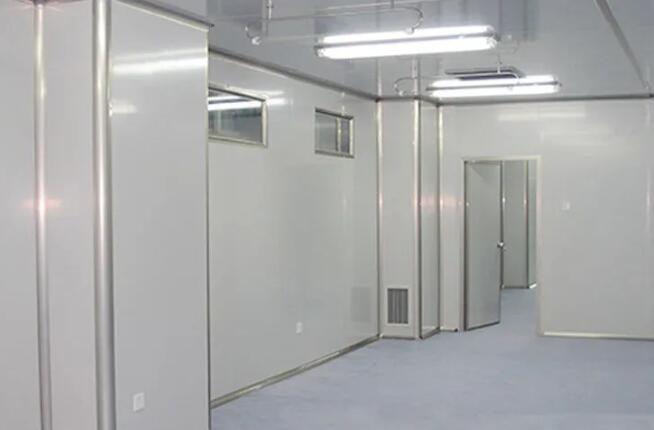
| The food cleaning workshop needs to meet the air purification standard of 100000 levels. Building a clean workshop in a food factory can effectively reduce the spoilage and mold growth of the produced products, extend the shelf life of food, and improve production efficiency. What is a clean workshop A clean room, also known as a dust-free workshop, cleanroom, or cleanroom, refers to a specially designed room that removes pollutants such as particles, harmful air, and bacteria from the air within a certain spatial range, and controls indoor temperature, cleanliness, pressure, airflow velocity, distribution, noise, vibration, lighting, and static electricity within a certain range of requirements. That is to say, regardless of the changes in external air conditions, the indoor environment can maintain the originally set performance requirements such as cleanliness, temperature, humidity, and pressure. What is a 100000 level clean workshop? Simply put, it means that the diameter in each cubic meter of air in the workshop is ≥ 0.5 μ The number of particles should not exceed 3.52 million. The fewer particles in the air, the less dust and microorganisms there are, and the cleaner the air. The 100000 level clean workshop also requires the workshop to have 15-19 air changes per hour, and the air purification time after complete air changes should not exceed 40 minutes. The zoning of the clean workshop in the 02 food factory The clean workshop of a general food factory can be roughly divided into three areas: general operation area, quasi cleaning area, and cleaning operation area. 1. General work area (non clean area): general storage areas for raw materials, finished products, tools, packaging and finished product transportation areas, and other areas with low exposure risks of raw materials and finished products, such as outer packaging rooms, raw material warehouses, packaging material warehouses, outer packaging workshops, finished product warehouses, etc. 2. Quasi clean area: requires secondary areas such as raw material processing, packaging material processing, packaging, buffering room (unpacking room), general production and processing room, inner packaging room for non ready to eat food, and other areas where finished products are processed but not directly exposed. 3. Clean work area: refers to the area with the highest requirements for hygiene environment, personnel and environment, and must be disinfected and changed before entering, such as the processing area of raw materials and finished products exposed, the cold processing room of food, the cooling room of ready to eat food, the storage room of ready to pack ready to eat food, and the inner packaging room of ready to eat food. Food factories with clean workshops should minimize the occurrence of pollution sources, cross contamination, mixing, and errors in site selection, design, layout, construction, and renovation. The factory environment is clean, and the flow of people and logistics is reasonable. There should be appropriate access control measures to prevent unauthorized personnel from entering. Save the completion materials for construction and construction. Buildings with severe air pollution during the production process should be built on the downwind side of the factory with the highest wind direction throughout the year. When production processes that affect each other are not suitable to be located within the same building, effective separation measures should be taken between each production area. The production of fermented products should have a dedicated fermentation workshop. 03 Requirements for Clean Production Area Processes that require sterility but cannot achieve final sterilization, and processes that can achieve final sterilization but undergo aseptic operations after sterilization, should be carried out in clean production areas. A clean production area with good hygiene production environment requirements should include storage and processing areas for perishable food, ready to eat semi-finished products or finished products before final cooling or packaging, pre-treatment of raw materials that cannot be sterilized, and product sealing |

