
News list
Recommended news
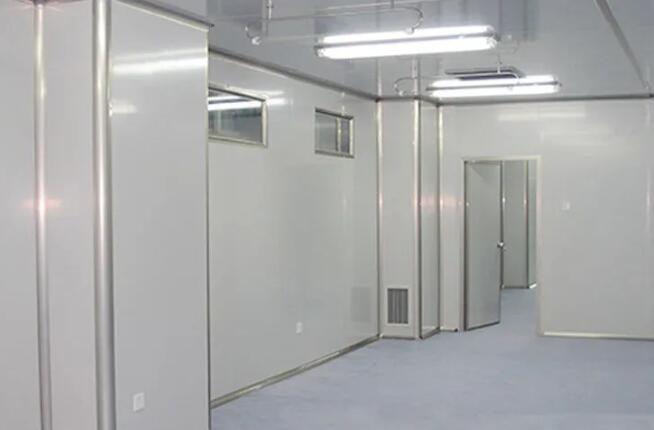 Building a dust-free workshop for medica
2024-02-01
 Design of Food Cleanroom
2024-02-01
Purification engineering in the spraying industry |
Publisher:Suzhou Lingxi Purification Engineering Co., Ltd. │ Click count:556 │ Publication time:2024-02-01 14:52:51 │ close |
| 1、 Overview of Scheme Process: The dust-free workshops in the electroplating and spraying industry can be divided into two types: the first type is continuous painting of semi-finished products under batch production conditions, which is usually carried out in paint rooms with ventilation and dust removal equipment, and then dried, such as paint workshops in automobile, tractor, and bicycle factories. The second type is single piece small batch production, where semi-finished products are painted at fixed points in the workshop and then dried, such as paint workshops in heavy-duty machinery factories, mining equipment factories, and general machinery factories The final process of manufacturing various components in a machine tool factory is painting. The general process of painting machine tools and their components is: Rust removal - apply primer - dry - apply putty - dry - polish putty flat - blow clean - spray paint - dry In the past, the paint workshops of machine tool factories, general machine factories, and machine parts factories generally did not have ventilation and dust removal facilities. In order to improve the working conditions of workers, ventilation and dust removal design renovations were carried out in the paint workshops of several machine tool factories. This not only effectively eliminated toxic substances and dust, but also ensured the smooth progress of the production process 2、 Determination of ventilation and dust removal design scheme 1. Determine ventilation and dust removal methods How to effectively eliminate harmful substances in the air and design reasonable ventilation and dust removal devices has always been a research topic for professionals in this field. Taking the painting workshop of a medium-sized machine tool factory as an example, a design plan is determined based on the characteristics of the machine tool painting workshop. The building space of the machine tool painting workshop is tall, and rust removal, painting, putty grinding, painting, and other processes of processed parts are carried out in the workshop; Painted workpieces can be large or small, with large machine tools weighing over five tons and small parts weighing less than five kilograms; There is a large crane installed above the workshop. The ventilation and dust collector in this paint workshop should adopt a centralized horizontal air duct for uniform air supply and local exhaust. The air supply flow should follow the direction of the dust suction port, promoting the capture and suppression of toxic gases and dust, and suppressing dust flying 2. Design of exhaust device The exhaust device should be designed based on factors such as the size of the painted workpiece, the shape of the workpiece, and ease of operation. As shown in Figure 1, there are three forms. The first is the trench suction type It is suitable for integral machine tools and larger casting workpieces. The suction port is set on the ground on both sides of the workpiece, and there is a cast iron cover plate with slits on the suction port. Toxic gases enter the underground air duct through the slits of the cover plate and are discharged The second type is bilateral inhalation It is suitable for small and medium-sized workpieces. The workbench and suction port are set on both sides in the direction of the air flow. The height of the workbench and suction port is determined according to the size of the workpiece and the convenience of worker operation. The height of the workpiece generally does not exceed the height of the exhaust hood The third type is fully aspirated It is suitable for larger and lighter shell components, with the suction port installed on a worktable with ventilation openings. Harmful gases and dust enter the air duct through the ventilation holes of the worktable and are discharged outdoors 3. The characteristics of this ventilation and dust removal method and exhaust device are: a. The air flow organization is reasonable. Due to the use of upward supply and downward discharge, operators can bathe in fresh air at any time, and toxic gases and dust slightly heavier than air can be promptly eliminated b. The workers operate flexibly and conveniently, and the lifting and loading and unloading are smooth and unobstructed c. The paint spraying and drying processes are carried out at the same location, without the need for separate paint spraying rooms and drying rooms, |

