
News list
Recommended news
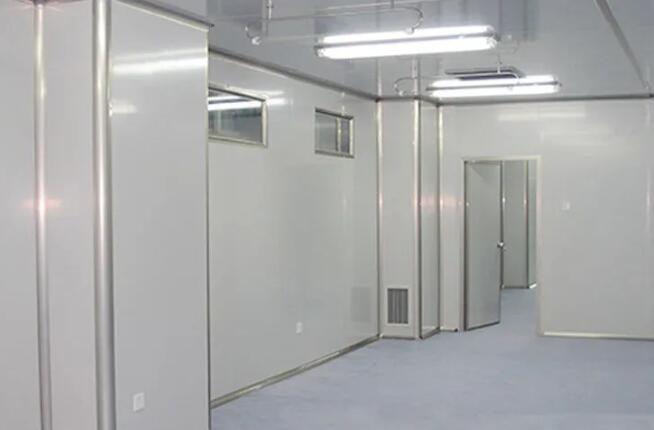 Building a dust-free workshop for medica
2024-02-01
 Design of Food Cleanroom
2024-02-01
What is the level standard for a dust-free workshop |
Publisher:Suzhou Lingxi Purification Engineering Co., Ltd. │ Click count:541 │ Publication time:2024-02-01 14:59:14 │ close |
| Dust free workshops can be divided into the following levels: level 1, level 100, level 1000, level 10000, level 100000, level 300000, and level million. By controlling the amount of fine dust with a particle size of less than 0.5 micrometers per cubic meter to below 3500, it meets the A-level international dust-free standard. At present, the dust-free standards applied in chip level production and processing have higher requirements for dust than A-level, and such high standards are mainly applied in the production of some higher-level chips. The amount of fine dust is strictly controlled within 1000 per cubic meter, which is commonly known as the thousand level in the industry. The selection of dust-free workshop address should comply with the principles of favorable production, convenient living, saving investment and operating costs. The distance between the dust-free workshop and the main traffic road should be at least 50 meters. The factory site should be located in an area with good natural environment and water quality, low atmospheric dust concentration, and favorable microclimate caused by terrain, features, and landforms for production and energy conservation. It should be far away from areas that emit a large amount of dust, smoke, toxic gases, and microorganisms, such as airports, railways, docks, transportation arteries, etc., and be on the windward side of pollution sources and the dominant wind direction throughout the year, with a certain protective distance. Extended Information: A room designed specifically to eliminate pollutants such as particles, harmful air, and bacteria from the air within a certain spatial range, and to control indoor temperature, cleanliness, pressure, airflow velocity and distribution, noise, vibration, lighting, and static electricity within a certain range of requirements. That is to say, regardless of the changes in external air conditions, the indoor environment can maintain the originally set performance requirements such as cleanliness, temperature, humidity, and pressure. Similar to the effect of diffusion, when the filter material has static electricity (electret material), the longer the dust stays in the filter material, the greater the possibility of being adsorbed by the material. Changing the wind speed will significantly alter the filtration efficiency of electrostatic materials. If you know there is static electricity on the material, when designing an air conditioning system, you should try to minimize the airflow through each filter as much as possible. For large particle dust mainly based on inertia mechanism, according to traditional theory, the probability of collision between dust and fibers will decrease after the wind speed is reduced, and the filtration efficiency will also decrease accordingly. But in practice, this effect is not significant because as the wind speed decreases, the fiber's rebound force against dust also decreases, making it easier for dust to stick |

